
Ethan has spent a decade in automotive data, working with NHTSA datasets and OEM spec sheets. He writes about VIN decoding, recalls, and what to look for in a used car inspection.
View profileIs your VIN not found? Learn the top reasons why a VIN might not decode, how to fix it, and how to access vehicle history reports at ChassisVIN.com.
Have you ever tried to look up a vehicle using its VIN, only to get a frustrating VIN not found message? You're not alone. This can happen for many reasons. But don't worry! Getting this message doesn't mean you're out of luck. At ChassisVIN.com, we're here to help you understand why this happens and what you can do about it. Whether you're trying to check a used car's history, get a window sticker, or simply learn more about a vehicle, a VIN not found error can be a roadblock.
This article will walk you through the common reasons why a VIN not found error occurs. We'll also cover the solutions, and provide you with resources to help you get the vehicle information you need. We want you to have peace of mind and make informed decisions about the vehicles you're interested in.
Let's dive in and get those VINs decoded!
The VIN not found message can pop up for several reasons. Understanding these causes is the first step to finding a solution.
Here are the most common reasons:
This is the most common reason. It’s easy to make a mistake when typing a 17-character code! A single wrong number or letter can throw off the whole process. Remember, the VIN uses numbers and capital letters, but not the letters I, O, or Q. It's important to be very careful when entering the VIN.
Solution: Double-check the VIN carefully. Look at the VIN on the vehicle and compare it to what you typed. Make sure you're not mixing up similar-looking characters. It's like looking at your license plate! Even a small mistake can prevent a successful search.
Sometimes, a VIN simply isn't valid. This could be because the VIN is incomplete, contains illegal characters, or fails a checksum test. A checksum is a mathematical check to make sure the VIN is valid. This ensures data integrity. The VIN is not just a random string of characters. It has a specific format.
Solution: Verify the VIN. Ensure it is a standard 17-character VIN. Also, confirm that no characters are illegal. If you are unsure, you can use our VIN Decoder to validate your VIN.
If a vehicle is very new, its information might not be fully in the databases yet. Conversely, if a vehicle is very old, the data might not be available due to changes in record-keeping over time. New cars may take some time to be recorded.
Solution: Try again later if the vehicle is brand new. If the vehicle is old, the data may not be available. You might try using a different source.
Vehicle history databases, like the ones we use at ChassisVIN.com, gather information from many sources. However, coverage isn’t always perfect. Some vehicles, especially those from certain years, makes, or models, might not have complete information available. This can vary from one service to another.
Solution: Try another VIN check provider. Some providers have wider databases. Other providers are more focused on specific vehicles. You can try sample.
Unfortunately, in some cases, a VIN may be altered or fake. This is usually done to hide the vehicle’s true history. This can include hiding it from stolen reports, previous accidents, or other problems.
Solution: If you suspect a fraudulent VIN, it's best to avoid the vehicle. Report your suspicion to the authorities immediately. This is not common, but it's essential to protect yourself. In this case, a VIN check wouldn’t show any history, even if the VIN is entered correctly.
Vehicle history reports are often based on data from the United States. If the vehicle was never registered in the US, the VIN may not be found. This can happen with imported vehicles or vehicles that were primarily used outside the US.
Solution: Determine where the vehicle was registered. If it was not in the US, you will need to search for vehicle history information in the country of registration.
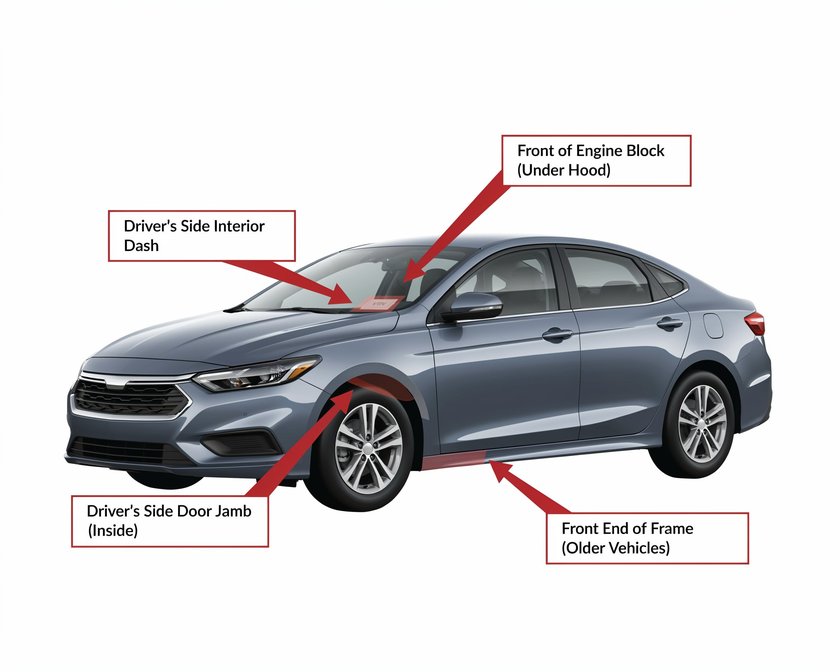
Before you can perform a VIN check, you need to find the VIN! Here’s where you can usually find it:
Take your time, and make sure you're looking in the right place. Finding the VIN is the first step to getting the information you need. Once you have it, you’re ready to go!
So, what should you do when you get a VIN not found message? Here are some steps you can take:
By taking these steps, you increase your chances of finding the vehicle information you need. Remember, persistence pays off!
A vehicle history report provides valuable information about a vehicle’s past. This can help you make informed decisions about buying a used car. Our VIN Decoder can help you get started.
Here’s what a vehicle history report might include:
This information can help you assess a vehicle's condition and determine if it's a good purchase. This can help you avoid potential problems down the road.
At ChassisVIN.com, we provide reliable vehicle history reports. We use the VIN to access critical information about a vehicle. We make the process simple and user-friendly. We are dedicated to providing accurate information. We offer a range of services, including VIN decoding, and vehicle history reports. Our goal is to help you make informed decisions about your vehicle purchases.
Here’s what we offer:
We provide the tools and information you need to make confident decisions. We're committed to helping you navigate the used car market. Explore our services today to get the information you need!
Dealing with a VIN not found message can be frustrating, but it doesn’t have to be the end of your search. By understanding the possible causes and taking the right steps, you can often get the information you need. Remember to always double-check the VIN, try different providers, and consider the age and origin of the vehicle.
At ChassisVIN.com, we're here to support you every step of the way. Our services are designed to give you peace of mind and help you make the best decisions. Don’t let a VIN not found error stop you from getting the information you need. Start your VIN check now and drive with confidence!
Ethan has spent a decade in automotive data, working with NHTSA datasets and OEM spec sheets. He writes about VIN decoding, recalls, and what to look for in a used car inspection.
View profilePull the real history behind any car — recalls, title brands, odometer trail.
Understand car battery lifespan. Discover the factors that impact it. Get tips to extend your battery's life and how to get a vehicle history report.
Discover the VIN country codes. Learn how to identify where your car was made. Get a detailed guide to vehicle manufacturing origins and VIN structure.
Discover the best SUVs with captain seats in 2024. Get detailed reviews, comparisons, and find the perfect family SUV with extra comfort. Search your VIN now!
Get instant results, completely free. No account needed.