
How Many Axles Does a Car Have? [Explained]
Learn everything about car axles, their types, functions, and importance in this comprehensive guide.
Car Axles: What They Are and Everything You Should Know
When it comes to car mechanics, axles play a critical role in vehicle operation. Understanding their function can enhance your knowledge of how cars work and help identify potential issues early. In this guide, we’ll explain what car axles are, how they work, and why they’re essential to your car’s performance.
What is a car axle?
A car axle is a structural component that connects and supports the wheels, transferring power from the engine to the wheels to enable movement. Axles also bear the weight of the vehicle and its passengers, making them indispensable to driving safety and performance.
How many axles does a car have?
The number of axles on a car depends on its type and configuration. Most standard passenger cars have two axles—one for the front wheels and one for the rear. Specialized vehicles like trucks or buses may have more axles, depending on their size and purpose.
Front Axle vs. Rear Axle
The front axle supports and steers the front wheels, often housing mechanisms like brakes and suspension. The rear axle, on the other hand, is primarily responsible for transferring engine power to the rear wheels, especially in rear-wheel drive and all-wheel drive vehicles.
Why should you inspect your axles?
Axle inspections are crucial for maintaining vehicle safety and performance. Over time, wear and tear can lead to axle damage, causing issues like vibrations, noise, or difficulty steering. Regular inspections help prevent accidents and expensive repairs.
Who should inspect your axle and how often?
Professional mechanics should inspect your axles during routine vehicle maintenance. It’s advisable to have them checked every 10,000 to 15,000 miles or whenever you notice unusual symptoms like clunking noises or reduced handling performance.
Are axles covered by insurance?
Axle repairs may be covered under comprehensive or collision car insurance, especially if the damage results from an accident. However, general wear and tear are typically excluded, so understanding your policy is crucial.
How many axles does a car have brakes?
Brakes are typically installed on all axles of modern cars to ensure safety and balance during braking. This configuration ensures consistent stopping power, even under heavy loads or adverse conditions.
Types of Axles
There are various types of axles used in cars, each designed for specific functionalities:
- Rear Axle: Transfers power to the rear wheels.
- Front Axle: Handles steering and supports front-wheel braking.
- Stub Axle: Connects wheels to the main axle in smaller vehicles.
What is considered a 2-axle vehicle?
A 2-axle vehicle typically refers to standard passenger cars, SUVs, and some light trucks. These vehicles have one axle connecting the front wheels and another connecting the rear wheels.
What are floating axles?
Floating axles are designed to handle heavy loads while reducing wear on wheel bearings. They come in three main types:
- Semi-Floating Axle: Common in light trucks.
- Full-Floating Axle: Found in heavy-duty vehicles like trucks and buses.
- Three-Quarter Floating Axle: A hybrid option used in some passenger cars.
What is a 4-axle vehicle?
A 4-axle vehicle is a larger vehicle, such as a heavy truck or bus, designed to carry heavier loads. These vehicles have two axles at the front and two at the rear to distribute the weight effectively.
How many axles does a 4-wheel drive have?
A 4-wheel drive (4WD) vehicle usually has two axles but utilizes a drivetrain that delivers power to all four wheels, enhancing traction and stability on rough terrain.
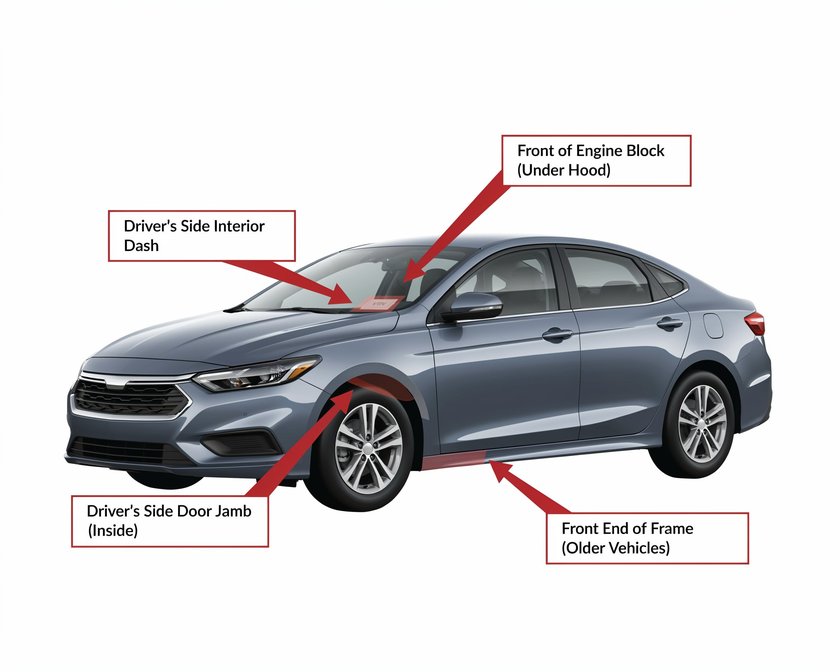
Check Your VIN
The Role of Axles in Vehicle Dynamics
Axles are not just mechanical components; they are integral to the overall dynamics of a vehicle. They influence handling, balance, and even fuel efficiency. For example, modern cars use advanced axle systems to distribute weight evenly, enhancing stability during high-speed driving or cornering.
Here are some key roles of axles in vehicle dynamics:
- Weight Distribution: Axles help balance the weight of the vehicle and its load.
- Steering Control: Front axles assist in smooth and precise steering.
- Power Transmission: Axles transfer torque from the engine to the wheels efficiently.
Common Issues with Car Axles and Their Solutions
Like any vehicle component, axles can develop issues over time. Common problems include wear and tear, misalignment, or damage due to accidents. Here are some frequent axle problems and their potential solutions:
- Clunking Noises: This often indicates a worn CV joint. Solution: Replace the CV joint.
- Vibrations While Driving: A bent axle could be the cause. Solution: Get the axle repaired or replaced by a professional.
- Leaking Grease: This signals a damaged axle boot. Solution: Replace the boot immediately to prevent further damage.
Axles in Electric and Hybrid Vehicles
Electric and hybrid vehicles often use specialized axle systems to accommodate their unique powertrains. Unlike traditional vehicles, electric cars may have a single motor driving the axle or even individual motors for each wheel. This allows for enhanced performance and regenerative braking.
Benefits of specialized axles in EVs:
- Improved Efficiency: Reduces energy loss during power transfer.
- Enhanced Control: Allows for precise torque distribution across wheels.
- Reduced Maintenance: Fewer moving parts mean less wear and tear.
A Comparison of Axle Types and Their Applications
Here is a table summarizing different types of axles and their typical applications:
| Axle Type | Common Usage | Key Benefits |
|---|---|---|
| Front Axle | Passenger cars, SUVs | Steering control, supports braking |
| Rear Axle | Trucks, RWD cars | Efficient power transfer |
| Floating Axle | Heavy-duty trucks | Handles heavy loads |
| Stub Axle | Smaller vehicles | Compact design, lightweight |
Understanding Axle Maintenance Costs
Maintaining axles can vary in cost depending on the type of vehicle and the specific issue. Here’s a breakdown of typical maintenance costs:
- CV Joint Replacement: $150–$850 per axle.
- Axle Boot Repair: $100–$300 per boot.
- Complete Axle Replacement: $300–$1,500 depending on the car model.
Regular maintenance, such as cleaning and lubricating moving parts, can prevent costly repairs down the line.
How Axle Design Has Evolved Over Time
Axle technology has come a long way from its early days of simple wooden rods used in horse-drawn carriages. Modern automotive axles are precision-engineered to handle higher speeds, increased loads, and advanced driving conditions.
Key milestones in axle evolution:
- Solid Axles: Used in early vehicles for simplicity and strength.
- Independent Suspension: Introduced for better handling and comfort.
- Electric Axles: Emerging technology in EVs for improved performance.
Key Axle Terminology You Should Know
Understanding some common axle-related terms can help you communicate effectively with mechanics and understand vehicle specifications. Here are a few key terms:
- CV Joint: A flexible joint allowing smooth torque transfer at various angles.
- Axle Ratio: The ratio of rotations between the drive shaft and the wheels, affecting speed and torque.
- Differential: A mechanism that distributes torque to wheels at different speeds during turns.
- Car Axles: What They Are and Everything You Should Know
- What is a car axle?
- How many axles does a car have?
- Why should you inspect your axles?
- Who should inspect your axle and how often?
- Are axles covered by insurance?
- What is considered a 2-axle vehicle?
- What are floating axles?
- The Role of Axles in Vehicle Dynamics
- Axles in Electric and Hybrid Vehicles
- Understanding Axle Maintenance Costs
Run a Free VIN Check
Pull the real history behind any car — recalls, title brands, odometer trail.
Related Articles

Car Battery Lifespan: How Long Do Car Batteries Last? - ChassisVIN
Understand car battery lifespan. Discover the factors that impact it. Get tips to extend your battery's life and how to get a vehicle history report.

VIN Country Codes: Decoding Your Vehicle's Origin | ChassisVIN
Discover the VIN country codes. Learn how to identify where your car was made. Get a detailed guide to vehicle manufacturing origins and VIN structure.

Best SUVs with Captain Seats: Top 2024 Models | ChassisVin.com
Discover the best SUVs with captain seats in 2024. Get detailed reviews, comparisons, and find the perfect family SUV with extra comfort. Search your VIN now!
Ready to Decode Your VIN?
Get instant results, completely free. No account needed.