
Check VIN Number on Classic Car: Unlock Your Car's History
Decode your classic car's VIN! Get vehicle history reports, find build sheets, and uncover valuable information about your vintage vehicle. Get started now!
Check VIN Number on Classic Car: Your Ultimate Guide
Are you a classic car enthusiast? Do you want to know more about your vintage vehicle? Checking a VIN number on a classic car is key. It's like unlocking a treasure chest of information. This guide will help you learn about your classic car's past. You can find everything from the model year to past issues.
At ChassisVIN.com, we help you find the info you need. You can get a detailed vehicle history. This way, you can learn all about your car's history.
Why Check VIN Number on Classic Car?
Why should you check the VIN number on a classic car? The answer is simple. A VIN check provides crucial insights. It helps you to protect your investment. It makes sure that your vintage car is what you think it is. Here are a few key reasons:
- Verify Authenticity: Classic cars are often rare. A VIN check confirms the car's original details. It helps you know if the car matches the records.
- Check for Damage: Old cars may have been in accidents. A VIN check can reveal past damage. This helps you make an informed decision.
- Reveal Ownership History: Find out how many owners your car had. See where it has been registered. This provides context. It may offer clues about care.
- Confirm Specifications: Know your car's features. Find out the engine type, transmission, and other details.
- Detect Potential Issues: A VIN check may show if there were any recalls. It can identify potential problems.
- Assess Value: Get a good price for your car. Know its history. This knowledge helps you understand the car's worth.
Checking the VIN gives you peace of mind. It helps ensure you are making a good purchase or keeping your car in top shape.
Understanding Classic Car VIN Numbers
VIN stands for Vehicle Identification Number. It is a unique code for every car. It's like a fingerprint. The VIN is a series of letters and numbers. It tells you about the car's make, model, and features. The VIN also reveals the car's manufacturing details. Learning how to read a VIN helps you get more information.
Before 1981, VINs were not standardized. They could have 11 to 17 characters. After 1981, the VIN format changed. Standardized VINs have 17 characters. These characters are grouped into sections. Each section tells a different story about the vehicle.
Here’s what each section of a modern 17-character VIN often represents:
- Positions 1-3: World Manufacturer Identifier (WMI). This shows the car's manufacturer and country of origin.
- Positions 4-8: Vehicle Descriptor Section. This details the car's model, body type, engine, and more.
- Position 9: Check Digit. This helps confirm the VIN's accuracy.
- Position 10: Model Year. This shows the car's model year.
- Position 11: Assembly Plant Code. This identifies where the car was made.
- Positions 12-17: Vehicle Identifier Section (VIS). This is the car's unique serial number.
For pre-1981 vehicles, VINs might have a different structure. A VIN decoder can help you understand these older VINs.
How to Find the VIN Number on a Classic Car
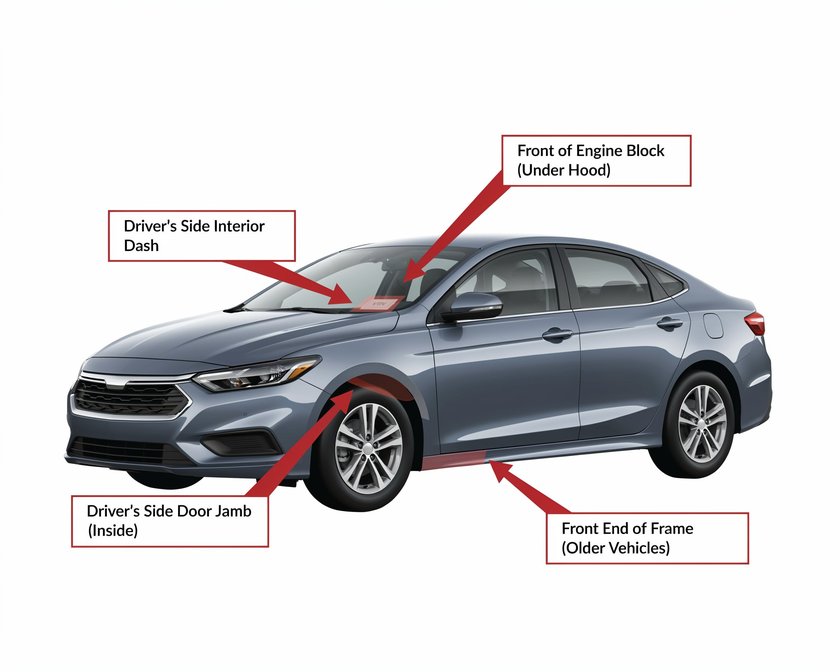
Finding the VIN on a classic car can vary. The location of the VIN depends on the car's make and model. The VIN is often easy to find. You can find it in several places:
- Dashboard: Look at the lower left side of the dashboard. This is often where you find the VIN on newer cars. It's visible through the windshield.
- Driver's Side Door Jamb: Open the driver's door. Look for a sticker or plate. It may be on the door jamb or the door frame.
- Engine Block: Check the engine block. The VIN might be stamped on it. This is true for some older models.
- Vehicle Title and Registration: The VIN appears on these documents. This is a reliable way to confirm the VIN.
- Insurance Card: Your car's insurance card has the VIN.
- Other Locations: Sometimes, you might find the VIN on the frame or in the trunk. Look in different places.
If you have trouble, consult your car's manual. A local mechanic can also help you find the VIN.
Decoding Classic Car VIN Numbers
Once you find the VIN, you can decode it. This gives you important information about your car. You can decode the VIN by using the resources online. ChassisVIN.com offers a VIN decoder. Here’s how to use it:
- Find Your VIN: Make sure you have the correct VIN. Double-check it.
- Go to ChassisVIN.com: Visit our VIN decoder page.
- Enter Your VIN: Type your VIN into the decoder.
- Submit the VIN: Click the 'Decode' button.
- View the Results: The decoder will show you the car’s details.
The VIN decoder reveals a lot about your car. You’ll find the manufacturer, model year, and body style. You may also see engine specs and factory options. You will learn a lot about your car’s history.
Check Your VIN
Classic Car VIN Lookup: What to Expect
A VIN lookup is like a detective search. It uncovers a lot of details. It helps you learn about your classic car. What can you expect from a VIN lookup?
- Vehicle History Reports: You can get detailed reports. These reports show the car’s past. They may include ownership history, accident records, and mileage.
- Build Sheets: A build sheet shows how the car was built at the factory. This includes the engine, transmission, and options.
- Specifications: You will find the car’s make, model, and year. You will also see engine size and other technical specs.
- Factory Options: The VIN can show what options the car had.
- Recall Information: See if the car was ever recalled. Know about any safety issues.
VIN lookups are a powerful tool for classic car owners. They give you information. This helps you maintain and protect your car. The more you know, the better. You can make informed decisions.
Using a Classic Car VIN Decoder
Using a classic car VIN decoder is simple. It only takes a few steps. The steps are easy to follow. You can quickly get information about your car. Here’s how to use a VIN decoder:
- Find Your VIN: Locate the VIN on your car. Make sure you have the right number.
- Go to the VIN Decoder: Open the VIN decoder on ChassisVIN.com.
- Enter the VIN: Type the VIN into the decoder. Double-check the number.
- Submit the VIN: Click the ‘Decode’ button to start.
- Review the Results: The decoder will show you the car's details.
A VIN decoder gives you instant information. You don't need to spend hours searching. You can quickly uncover your car's history. This helps you learn what makes your car special.
Benefits of a Classic Car VIN Lookup
A VIN lookup is a powerful tool. It helps you learn about your classic car. Here are some key benefits:
- Verify Vehicle Authenticity: Confirm your car's original features. Protect yourself from fraud.
- Detect Potential Issues: Find out if the car has been in accidents. Learn about any damage.
- Gain Insight into Value: Know your car's history. Understand how much it's worth.
- Access Detailed Specifications: Get engine specs and factory options.
- Make Informed Decisions: Use the VIN lookup before you buy or sell a classic car.
- Find Build Sheets: See how your car was built at the factory.
A VIN lookup gives you confidence. It helps you make informed decisions about your car. It's a valuable tool for any classic car owner. It's also good for those who want to buy or sell a classic car.
Classic Car VIN Lookup: Tools and Resources
Several tools and resources can help you with a classic car VIN lookup. These resources help you get the most out of your search. Here are some key tools and resources:
- VIN Decoders: These tools instantly decode your VIN. They give you the car's details.
- Vehicle History Report Services: These services provide detailed reports. They show ownership history, accident records, and more.
- Online Databases: Use online databases to find vehicle specifications and other details.
- Manufacturer Websites: Some manufacturers provide VIN lookup tools on their websites.
- Classic Car Clubs: These clubs can be a great resource. They often have experts.
- Automotive Forums: Online forums help you connect with other car enthusiasts.
Using these resources can help you get the most out of your VIN lookup. They give you the information you need.
Classic Car VIN Lookup: Ensuring Accuracy
Accuracy is key when doing a classic car VIN lookup. You want to make sure you get reliable information. Here’s how to ensure accuracy:
- Double-Check the VIN: Make sure the VIN you enter is correct.
- Use Reputable Sources: Use trusted VIN decoders and vehicle history services.
- Cross-Reference Information: Compare information from different sources.
- Check Documentation: Review your car’s title and registration.
- Consult Experts: Ask mechanics or classic car experts.
By following these steps, you can improve the accuracy of your VIN lookup. This will help you make better decisions. It will also give you peace of mind.
Classic Car VIN Lookup and Maintenance
A VIN lookup can help with your car’s maintenance. The VIN reveals the car's specifications. This helps you find the right parts. The VIN also shows factory options. You will know the car's original features. You can order the right parts. This helps you preserve your car's originality. It also helps maintain your car's value.
Use your VIN to access the vehicle’s build sheet. A build sheet is a detailed document. It lists all the features and options. This helps you maintain your car correctly. It helps you know what parts you need.
Classic Car VIN Lookup for Buyers and Sellers
If you’re buying or selling a classic car, a VIN lookup is very important. It helps both parties make a fair deal. For buyers, a VIN lookup can help you verify the car. You will know if the car has been in any accidents. The history report helps you get a fair price. The VIN lookup helps ensure the car is in good condition. It can also give you a better sense of its value.
For sellers, a VIN lookup shows you what the car is worth. It builds trust with potential buyers. A clean history report can increase the car’s value. It shows the buyer that the car has been well-maintained.
- Check VIN Number on Classic Car: Your Ultimate Guide
- Why Check VIN Number on Classic Car?
- Understanding Classic Car VIN Numbers
- How to Find the VIN Number on a Classic Car
- Decoding Classic Car VIN Numbers
- Classic Car VIN Lookup: What to Expect
- Using a Classic Car VIN Decoder
- Benefits of a Classic Car VIN Lookup
- Classic Car VIN Lookup: Tools and Resources
- Classic Car VIN Lookup: Ensuring Accuracy
- Classic Car VIN Lookup and Maintenance
- Classic Car VIN Lookup for Buyers and Sellers
Run a Free VIN Check
Pull the real history behind any car — recalls, title brands, odometer trail.
Related Articles

Car Battery Lifespan: How Long Do Car Batteries Last? - ChassisVIN
Understand car battery lifespan. Discover the factors that impact it. Get tips to extend your battery's life and how to get a vehicle history report.

VIN Country Codes: Decoding Your Vehicle's Origin | ChassisVIN
Discover the VIN country codes. Learn how to identify where your car was made. Get a detailed guide to vehicle manufacturing origins and VIN structure.

Best SUVs with Captain Seats: Top 2024 Models | ChassisVin.com
Discover the best SUVs with captain seats in 2024. Get detailed reviews, comparisons, and find the perfect family SUV with extra comfort. Search your VIN now!
Ready to Decode Your VIN?
Get instant results, completely free. No account needed.